Includes annotation tools that allow to review, collaborate, annotate documents right in the viewer. Within a single user interface, one can freely write their comments on the document and share with others, and thus reducing decision-making process, and increase collaboration among users. Provides facility to add comments via sticky notes, apply digital stamps and much more thus making viewer an ideal solution for a business workflow.

Allows user to save, copy, paste and print annotations and contents and also to view, markup and annotate documents all at the same time and in one place. Add text, sticky notes, images, rubber stamps, etc. to TIFF, PDF, JPG, and many more file formats. The applet would be displayed on the web page by making use of the deprecated applet HTML element, or the recommended object element. The embed element can be used with Mozilla family browsers .

This specifies the applet's source and location. Both object and embed tags can also download and install Java virtual machine or at least lead to the plugin page. Applet and object tags also support loading of the serialized applets that start in some particular state. Tags also specify the message that shows up in place of the applet if the browser cannot run it due to any reason. As a Java developer, it's a preferred option for running Java applets that don't involve the utilization of an internet browser.

The applet viewer logically takes the place of an internet browser, it functions very differently from an internet browser. The applet viewer operates on HTML documents, but all it's for is embedded applet tags; the other HTML code within the document is ignored. Whenever the applet viewer encounters an applet tag in an HTML document, it launches a separate applet viewer window containing the respective applet. Instead, they run within either an internet browser or an applet viewer.

Output to your applet's window isn't performed by System.out.println(). Rather, in non-Swing applets, the output is handled with various AWT methods, like drawString(), which outputs a string to a specified X, Y location. Why am I limited to printing 50 pages at a time?

You currently have two image viewers available to use; the Java viewer and HTML 5 viewer. The Java viewer is unchanged and you can still use it to print images without limits. Should you wish to switch between the Java and HTML 5 viewers, just click on the "Change Viewer" link in the top right of the viewing window. However, since modern browsers are dropping support for Java we had to look for the next generation of viewers. With it comes many benefits such as native browser support, mobile support, faster loading and much more.

However, one dramatic limitation of HTML 5 is with printing. After you selected your print options and selected options in the windows print dialog, we could then render each page as it was printing. With HTML 5 it is just like printing a web page. There is a memory limit to how many pages that can be rendered to print which varies based on each person's PC. A larger limit can be used but it may exceed the users memory size and cause the browser to give up on the rendering with an out of memory error.
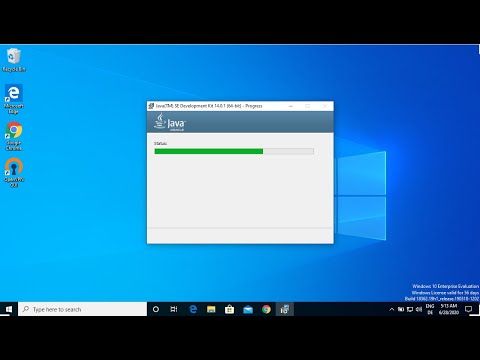
The 50 page printing limit was implemented in an effort to reduce errors our customers were receiving when printing large batches. The user launched the Java applet from a web page, and the applet was then executed within a Java virtual machine in a process separate from the web browser itself. A Java applet could appear in a frame of the web page, a new application window, Sun's AppletViewer, or a stand-alone tool for testing applets. Applet viewer is a command-line program to run Java applets.

It helps you to test an applet before you run it in a browser. An applet is a special type of application that's included as a part of an HTML page and can be stored in a web page and run within a web browser. The applet's code gets transferred to the system and then the Java Virtual Machine of the browser executes that code and displays the output.

So for running the applet, the browser should be Java enabled. To create an applet, we need to define a class that inherits the Applet. Its not always mandatory to open a Web browser for running an applet. AppletViewer is a standalone command-line program from Sun Microsystems to run Java applets. Appletviewer is usually employed by developers for testing their applets before deploying them to an internet site. The appletviewer command connects to the documents or resources designated by URLs and displays each applet referenced by the documents in its own window.

Applet provides all necessary support for applet execution, such as starting and stopping. It also provides methods that load and display images, and methods that load and play audio clips. In turn, Panel extends Container, which extends Component.

These classes provide support for Java's window-based, graphical interface. Thus, Applet provides all of the necessary support for window-based activities. The JDK has a collection of progamming tools, including java, javac, javadoc, javaws, jar, apt, appletviewer, visualVM, etc.
Too, the JDK also comes with a complete Java Runtime Environment, usually called a private runtime, due to the fact that it is separated from the «regular» JRE and has extra contents. In Java, it is the best option for running Java applets without the use of a web browser. Appletviewer is generally used since they fill the place of web browser, it functions very differently from a web browser. Each time the applet viewer encounters an applet tag in an HTML document, it launches a separate applet viewer window containing the respective applet. Most browsers executed Java applets in a sandbox, preventing applets from accessing local data like the file system. The code of the applet was downloaded from a web server, after which the browser either embeded the applet into a web page or opened a new window showing the applet's user interface.
You need appletviewer to debug java applets, if you want just to run them you need a Java Runtime Environment and the Java plugin for your favourite browser. Java applet is not supported by Java as well as the browsers. So we need to use appletviewer command of older versions of Java to run an applet program. Appletviewer is for running as well as debugging java applets without any need for a browser.

Java is a computer programming language that is concurrent, class-based and object-oriented. It was originally developed by James Gosling at Sun Microsystems. Java applications are compiled to bytecode that can run on any Java virtual machine regardless of computer architecture. The class in the program must be declared as public, because it will be accessed by code that is outside the program.Every Applet application must declare a paint() method.
This method is defined by AWT class and must be overridden by the applet. The paint() method is called each time when an applet needs to redisplay its output. Another important thing to notice about applet application is that, execution of an applet does not begin at main() method. In fact an applet application does not have any main() method. Java SE Development Kit is an environment designed for building applications, applets and components using the Java programming language.

The program provides you useful tools for developing and testing programs written in the Java programming language and running on the Java platform. The class in the program must be declared public because code outside of the program will be accessed to it. Every request in Applet must declare a method for paint. AWT class defines this method and the applet must override it. Every moment an applet requires to redisplay its output, the paint() method is called. Another significant thing to notice about the applet implementation is that an applet execution does not start with the main method.

In reality, there is no primary/main method in an applet implementation. A signed applet contains a signature that the browser should verify through a remotely running, independent certificate authority server. Producing this signature involves specialized tools and interaction with the authority server maintainers.

Once the signature is verified, and the user of the current machine also approves, a signed applet can get more rights, becoming equivalent to an ordinary standalone program. The rationale is that the author of the applet is now known and will be responsible for any deliberate damage. This approach allows applets to be used for many tasks that are otherwise not possible by client-side scripting. However, this approach requires more responsibility from the user, deciding whom he or she trusts. Hence signed applets that appeared from Java 1.1 may actually have more security concerns.

Some studies mention applets crashing the browser or overusing CPU resources but these are classified as nuisances and not as true security flaws. However, unsigned applets may be involved in combined attacks that exploit a combination of multiple severe configuration errors in other parts of the system. An applet may also try DoS attacks on the server where it is hosted, but usually people who manage the web site also manage the applet, making this unreasonable. Communities may solve this problem via source code review or running applets on a dedicated domain. Java applets would depend on a Java Runtime Environment , a complex and heavy-weight software package. They also normally required a plug-in for the web browser.
Some organizations only allow software installed by an administrator. As a result, users were unable to view applets unless one was important enough to justify contacting the administrator to request installation of the JRE and plug-in. To support multiple browsers, using the object tag to embed an applet would require JavaScript , usage of additional browser-specific tags or delivering adapted output from the server side. The perfect ready-to-use tool for fast and easy creation of zoomable images and interactive texts on the web.

ImageZoom Standard creates hotspots or free zoom on single images. Instantly viewable on the web with plug-in-free Java applet viewer or via Flash 6 Player. Combines high resolution zooms on the web with rapid downloads. The MST Viewer enables users to convert documents and images on-the-fly tomore universal file formats for ease of use and portability. Documents and images can be converted into any number of file formats including PDF, TIFF, and many more. In order for Java applications to be able to run we need to setup a 'JAVA_HOME' environment variable that will point to the Java installation directory.
In addition, if we want to run Java commands from a command prompt we need to setup the 'PATH' environment variable to contain the Java bin directory. To execute an Applet with an applet viewer, write short HTML file as discussed above. If you name it as run.htm, then the following command will run your applet program.
As of September, 2018, Firefox no longer offers a version which supports NPAPI, the technology required to run Java applets. The Java Plugin for web browsers relies on the cross-platform plugin architecture NPAPI, which had been supported by all major web browsers for over a decade. The 64 bit version of Firefox has never supported NPAPI, and Firefox version 52ESR is the last release to support the technology. It is below the security baseline, and no longer supported. This time, however, you do not run the java program. This program is a special tool included with the JDK that lets you quickly test an applet.

You need to give this program an HTML file, rather than the name of a Java class file. The contents of the WelcomeApplet.html file are shown below in Example 2-3. In addition to displaying information in its window, an applet can also put a message to the status window of the browser or applet viewer on which it's running. To do so, call showStatus() with the String that you simply want to be displayed. The status window may be a good place to offer the user feedback about its occurring within the applet, suggest options, or possibly report some sorts of errors.

When an HTML document is loaded by appletviewer, every applet on that document will begin running in its own window. The size of these windows depends on the HEIGHT and WIDTH attributes that were set in the applet's HTML tag. The first implementations involved downloading an applet class by class. While classes are small files, there are often many of them, so applets got a reputation as slow-loading components. However, since .jars were introduced, an applet is usually delivered as a single file that has a size similar to an image file .

An applet can also be a text area only; providing, for instance, a cross-platform command-line interface to some remote system. If needed, an applet can leave the dedicated area and run as a separate window. Applets can also play media in formats that are not natively supported by the browser. ImageZoom displays products via a Web site and is efficient in terms of bandwidth. It is based on the idea that it only sends the information that is required.

For example, instead of a high-definition image (i.e., 10MB), only the section that is zoomed into on the Web site is downloaded. No plug-in is needed with the Java applet viewer or with Flash player. JavaScript API allows the developer to add transition effects. The MST Java Applet Viewer can be integrated with IBM CM8 eClient or IBM Content Navigator.

The MST Java Applet Viewer is 100% backwards compatible with all existing document types and all existing annotations. The MST Viewer can provide users with the ability to hide or remove sensitive and confidential information from documents and images. Redact details such as names, addresses, social security numbers , date of birth , credit card details, bank account numbers, and much more easily from documents. The eViewer's document manipulation tools provide essential tools with using digital documents and images in order to better manage and handle them during the reviewing processes. It enables users to move pages within a document, remove unnecessary content from documents, merge documents and much more. The eViewer delivers high-speed document and image viewing capabilities to your users, increasing productivity, and reducing downtime.

Ultra-fast first page display technology greatly reduces rendering time which can be significant for large files. Gets the accurate source code of Java applications by decompiling complex Java applets and binaries as well as disassembling the CLASS files. Free Java Applets allows you incorporate a high degree of Java power to your web page. Developers can learn from the Free Java Applets programs and source codes. However, keep in mind that the Free Java Applets is not a Trialware or Evalware application. The application has varying versions that provide different Java applets for you to use and you can use all of them for free.